Viper’s-buglosses:
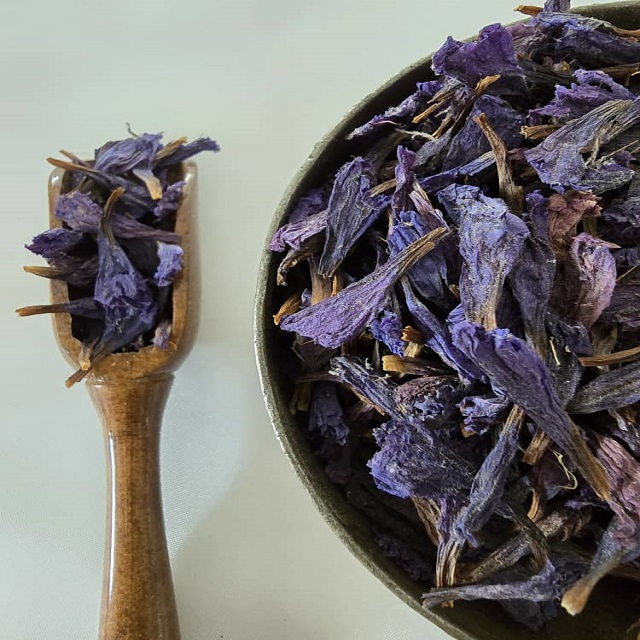
Persian boraginaceae (Echium amoenum) is an annual plant of the Boraginaceae family and is considered one of the important medicinal plants in traditional Iranian medicine. The leaves and flowers are the edible parts of boraginaceae. The main biological compounds that this plant contains include polyphenols, anthocyanidins, flavonoids, sterols, saponins, unsaturated terpenoids and unsaturated fatty acids, and minor amounts of pyrrolizidine alkaloids. Rosmarinic acid, with its anti-inflammatory, antiviral and antimicrobial properties, is known as one of the main polyphenols in boraginaceae. boraginaceae has bioactive compounds that have health benefits, including antibacterial, antiviral, anti-inflammatory, analgesic and immune system regulating properties.
Botany:
The Boraginaceae family is one of the largest plant families classified in the dicotyledonous group, comprising over 100 genera and 200 species. Plants in this family are mostly distributed in temperate and tropical regions of the world. This plant, with the scientific name Echium amoenum, grows in mountainous areas and up to 2500 meters above sea level. Borage is distributed up to 2500 meters above sea level in different regions of Iran. Persian Borage is an annual, herbaceous and hairy plant whose height varies from 70 to 100 centimeters and its stems are straight and multi-branched, hollow and covered with rough fibers. Its leaves are solitary and simple, with the lower leaves of the plant having petioles and the upper leaves of the plant without petioles.
Chemical Composition:
The main bioactive compounds of Echium amoenum are: polyphenols, of which rosmarinic acid is known as the main component, anthocyanidins, flavonoids, sterols, saponins, unsaturated terpenoids and unsaturated fatty acids and some pyrrolizidine alkaloids. Also, a report has mentioned tan, flavonoid, anthocyanin, mucilage and a small amount of alkaloids as components found in Persian boragin.
Medicinal Properties:
Feeding the aqueous extract of borage to animals receiving its extract has anti-dangerous effects. The effectiveness of the hydroalcoholic extract of borage to improve memory loss and the absence of scopolamine-induced effects on rats has been proven, which is attributed to the antioxidant activities of this extract and lipid peroxidation in the brain. Persian boragin extract had a hypoglycemic effect on rats and reduced weight. And this can be attributed to compounds such as flavonoids, saponins and its antioxidant properties.
Ancient Medicine:
For the first time, the benefits of this traditional medicine were discovered by the Romans around 300 BC. Homer (the famous Greek poet) believed that this plant has a positive effect on the nerves. In old Iranian medical books such as Tuhfat-ul-Hakim and Makhzan-ul-Adowiyyah (Khorasani) and Qanun Abu Ali Sina(avicena), it was believed that this plant has medicinal properties. This plant has been used in traditional Iranian medicine for centuries. Abu Ali Sina (1037-980 AD) considered this plant to reduce the cost of making and also considered it to treat wounds and mouth ulcers. In the book Makhzan-ul-Adowiyyah, it is stated that Echium amoenum is used to treat cough, sore throat, pneumonia and functional disorders and is recommended for severe treatment of children.
muhammad.j.mohit1@gmail.com –
that’s good