
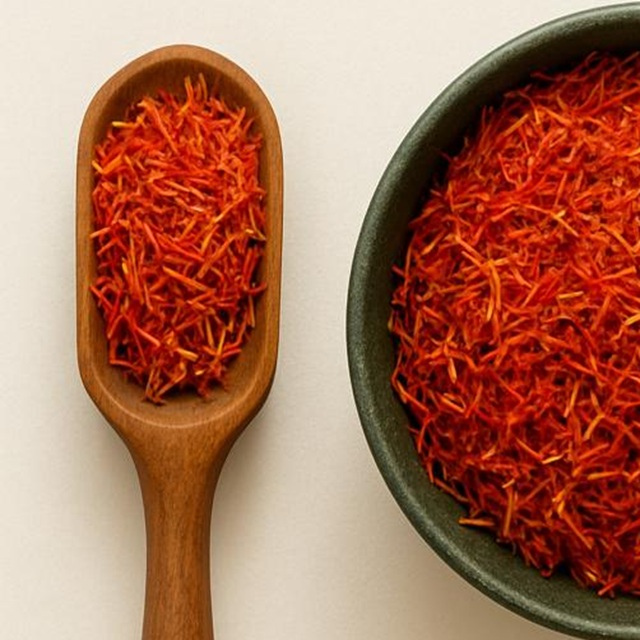
Safflower:
Safflower is a plant with a wide range of medicinal effects that is used to treat dysmenorrhea, amenorrhea, abdominal pain and abdominal mass after childbirth, joint pain, etc. Many compounds have been extracted and identified in this plant, and flavonoids and quinochalcones are known as active and significant compounds in this plant.
Botany:
An annual plant, with cylindrical and straight stems that grows to a height of 30 to 180 centimeters depending on different weather conditions. This plant has a strong main root that may penetrate the soil to a depth of 2 to 3 meters. The leaves are petiolate, elliptical, dark green, shiny and hairless, which are arranged spirally and alternately on the stem. The main stem and secondary branches end in a clasp-like inflorescence. The flowers consist of a number of continuous, tubular florets and are usually seen in red and yellow. Its fruit is a shoe-shaped (like a sunflower) with a transparent, creamy-white shell.
Chemical compounds:
Many chemical compounds such as alkaloids, flavonoids, quinochalcones, polystyrenes, steroids, fatty acids have been isolated from safflower, among which flavonoids and quinochalcones are considered the active and characteristic compounds of this plant.
Quinochalcones:
They are known as safflower pigments and contain yellow and red chalcones such as hydroxy safflower yellow A, safflower yellow A, safflower yellow B, safflower C, pericarthamine and carthamine.
Flavonoids: There are flavonoids with medicinal activities in safflower. In these compounds, flavonol glycosides with antioxidant activity are located, and the ability of these compounds to have antioxidant activity is related to their sugar structure. Also, flavonoids such as kaempferol, quercetin, luteolin and apigenin are present in safflower, which have antioxidant activity. Kaempferol has been selected as another standardized component to evaluate the medicinal quality of safflower.
Alkaloids: In addition to organic bases such as adenine, thymine, uracil, adenosine and uridines, derivatives of serotonin and spermidine have also been isolated from safflower.
Medicinal properties:
Safflower has antioxidant activity and eliminates free radicals. Studies have shown that the aqueous extract of safflower flowers causes the elimination of free radicals.
Safflower is one of the most common herbal medicines in China, which has protective effects on cerebral ischemia and myocardial ischemia and is used for the treatment of heart diseases and clinical applications. The protective effects on myocardial ischemia are partly through reducing oxidative stress caused by damage and death. Reducing cholesterol and blood sugar, accelerating blood flow, anti-inflammatory, antioxidant and anti-tumor effects, helping to regulate menstruation and treating skin and digestive problems were mentioned. Safflower oil is useful in skin care and improving its texture because it is rich in linoleic acid.
Reviews
There are no reviews yet.